Rules of Composition
Nine habits that turn a snapshot into a photograph you meant to take.
START HEREOpen your unit one-sheetPrint it or keep it open while you work.Open ↗A note on the example photos: several images in this lesson are the work of documentary photographer Steve McCurry, used for educational purposes only. Each pair is credited.
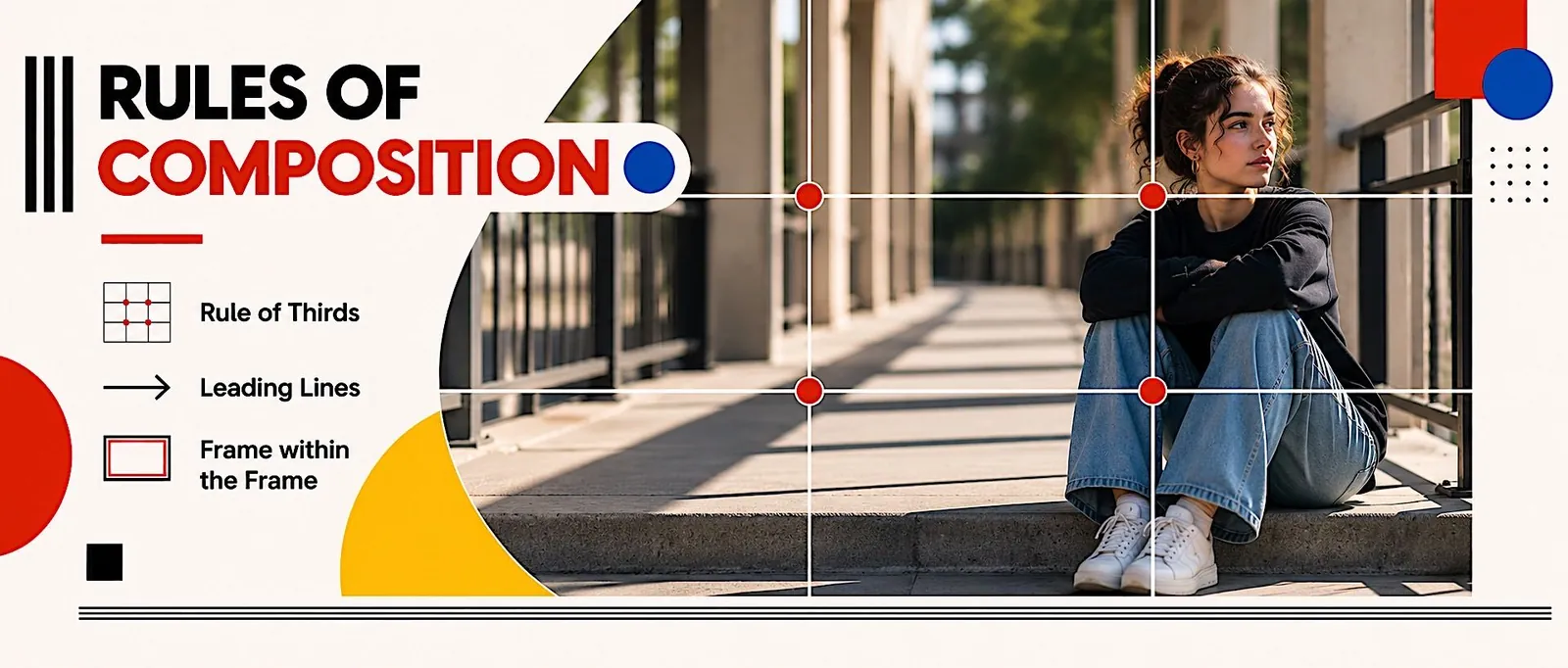
Imagine your viewfinder divided into a tic-tac-toe board, two lines across, two lines down. The rule of thirds says: don’t put your subject dead center. Put it where two of those lines cross instead. It feels like a small change, but it’s the fastest way to make a photo feel composed instead of just pointed-and-shot.
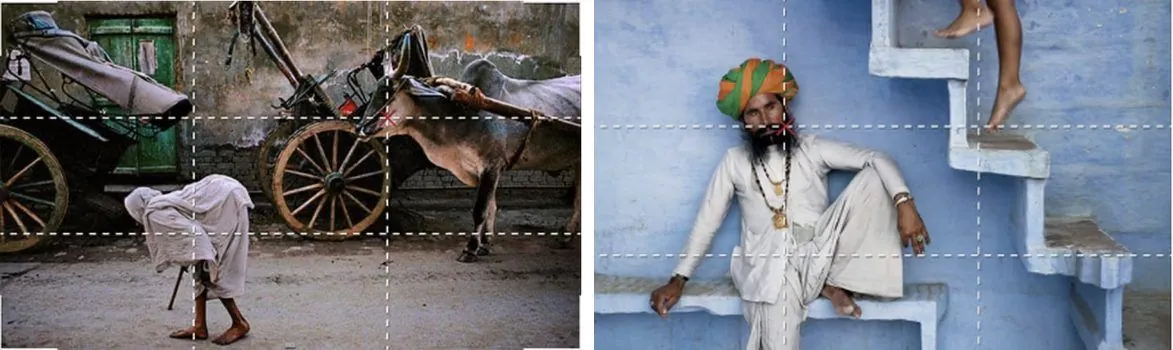
Photos by Steve McCurry: the subject placed along the grid, not centered.
Every scene already has lines in it, a road, a railing, a row of umbrellas, a set of train tracks. Leading lines use those real lines to walk the viewer’s eye straight toward your subject, the same way an arrow would. Find the line first, then find what it’s pointing at.
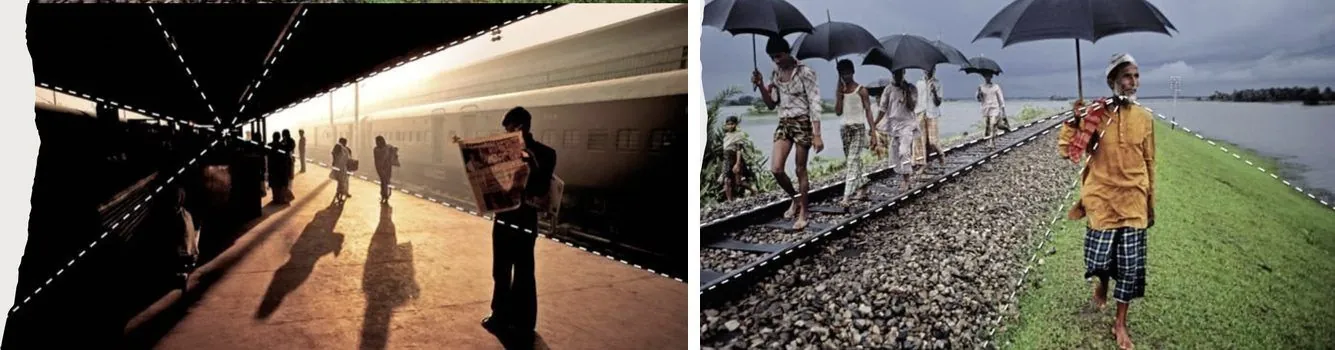
Photos by Steve McCurry: lines already in the scene, pulling the eye toward the subject.
A flat horizontal line feels calm and still. A diagonal feels like it’s moving. Tilt your camera, or find a diagonal that’s already there, a staircase, a shadow, a slope, and your photo picks up energy it wouldn’t have had lying flat.
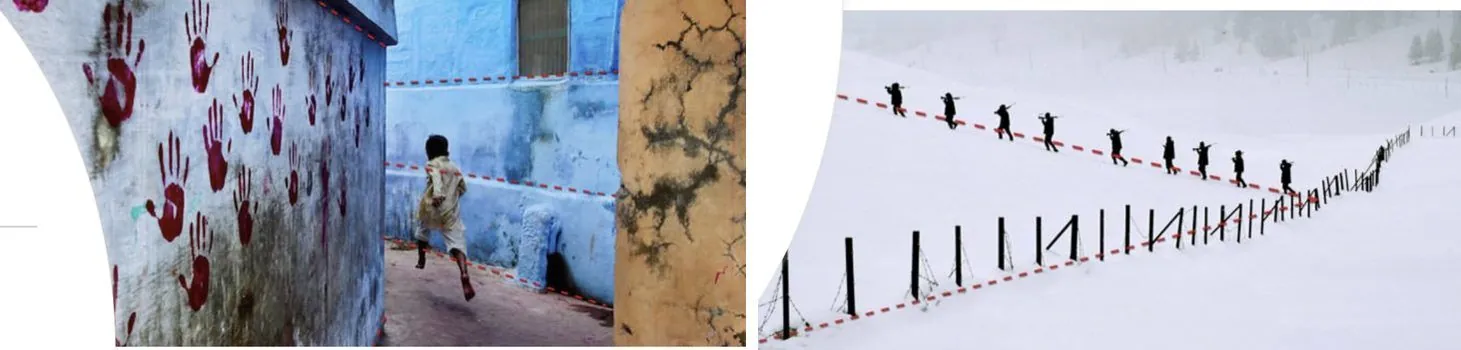
Photos by Steve McCurry: diagonal lines giving a still photo a sense of motion.
Look for a frame that’s already sitting in the scene, a window, a doorway, a gap between two people, an archway, and shoot your subject through it. A frame within the frame does two things at once: it tells the viewer exactly where to look, and it adds a sense of depth.
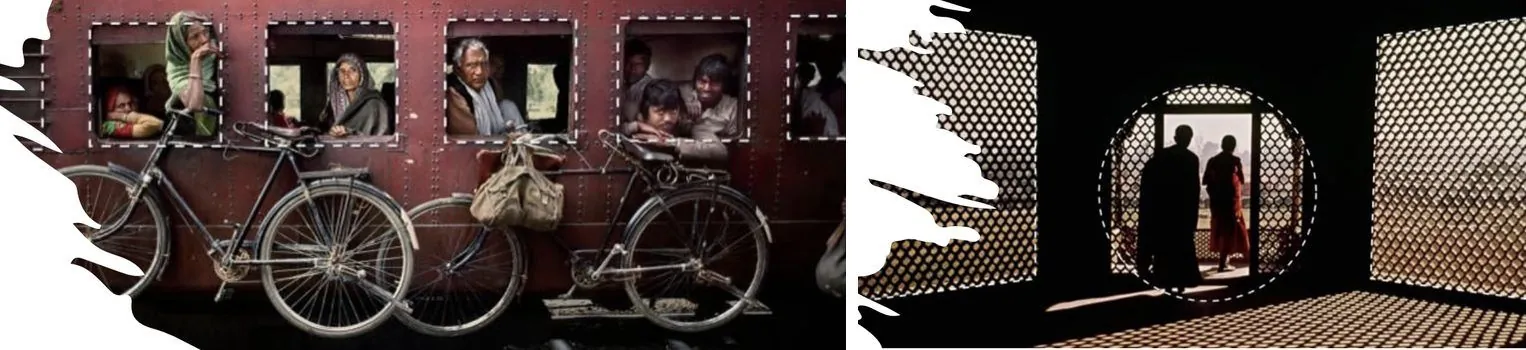
Photos by Steve McCurry: a natural frame inside the scene, focusing attention on the subject.
“Figure to ground” just means your subject (the figure) versus everything behind it (the ground). The bigger the contrast between the two, in color, brightness, sharpness, or size, the more your subject pops off the background instead of blending into it.
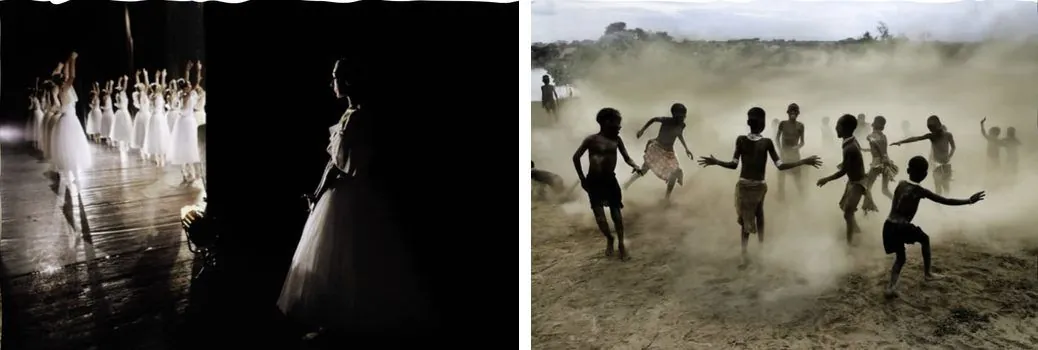
Photos by Steve McCurry: a subject standing clearly apart from its background.
New photographers almost always stand too far back. Filling the frame means getting close enough that your subject takes up most, or all, of the shot. No wasted space around the edges, no distractions, just the thing you actually want people to notice.

Photos by Steve McCurry: getting close enough that the subject takes over the frame.
Every strong photo gives the eye one clear place to land first, its center of interest. Everything else in the frame should support that one thing, not compete with it. Color, sharp focus, and placement are your main tools for pointing at it.

Photos by Steve McCurry: one unmistakable point where the eye lands first.
Repeating shapes, colors, or lines make a pattern, and patterns are naturally satisfying to look at, our eyes like to find order. But a pattern gets even more powerful the moment you break it: one thing that doesn’t match instantly becomes the most interesting thing in the photo.
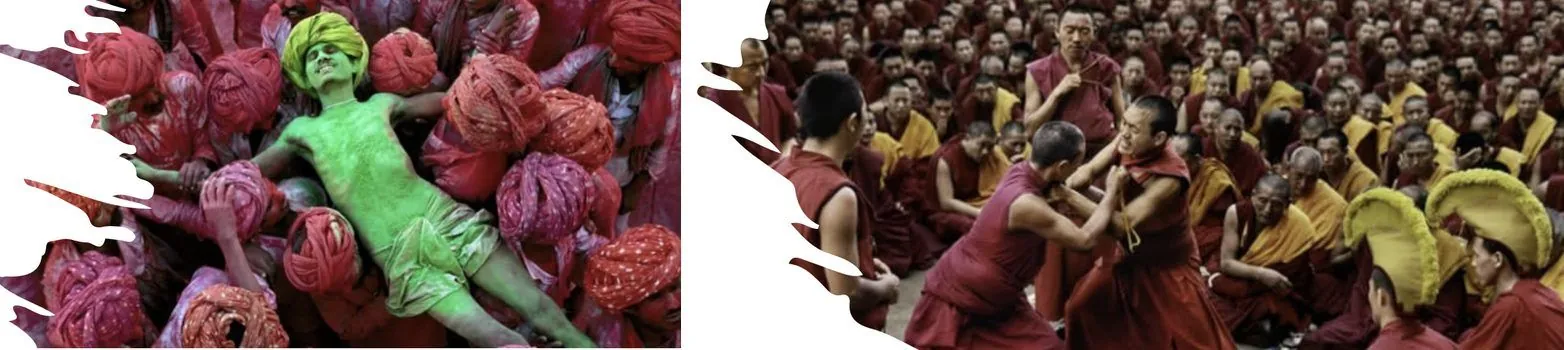
Photos by Steve McCurry: a repeating pattern, and a single element that breaks it.
Symmetry splits the frame into two matching halves, left mirroring right or top mirroring bottom. It’s one of the calmest, most ordered compositions you can shoot, and it’s especially powerful with reflections, architecture, and subjects placed dead center on purpose.

Photos by Steve McCurry: a frame split into two matching halves.
Guidelines, not rules
You won’t stop and calculate the rule of thirds before every shot, and you shouldn’t. The goal is to notice these patterns often enough in the real world that your eye starts finding them automatically, camera or not. Once you can see them on purpose, you can also decide when breaking one is the stronger choice.
Want to see more of Steve McCurry’s work, and what makes his eye for composition so distinctive? Read our profile on him in the Through the Lens series.
Your assignment
Assignment 02: Found Letters. Spell your first and last name with letters hiding in ordinary places on campus. When: shoot in Week 5, Monday. Build and hand in Week 5, Tuesday, due 9:00 pm.
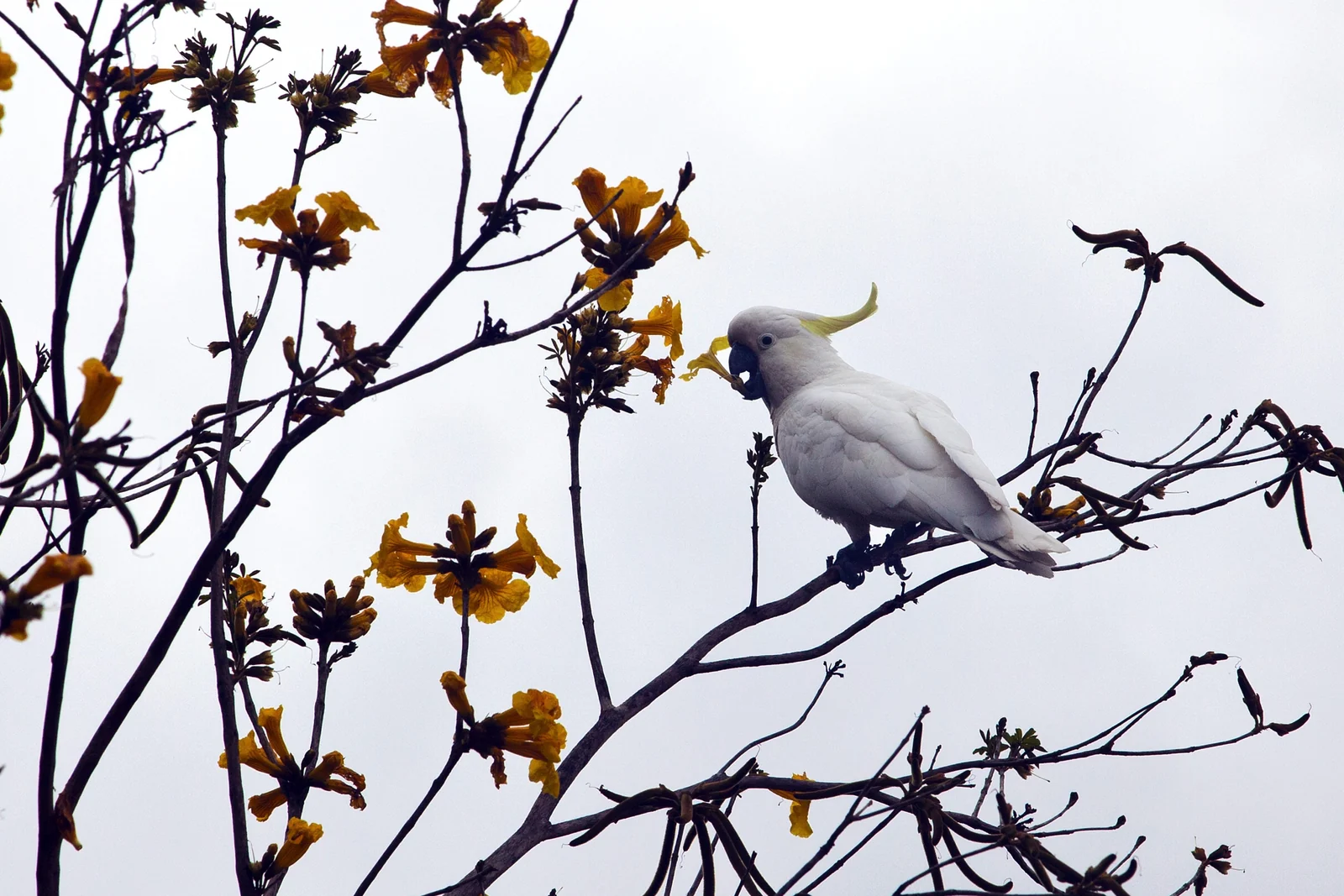
A white bird against a pale sky has almost no contrast with its ground. Here the dark branches do the work. They wrap around the cockatoo and set its bright shape apart from the sky.